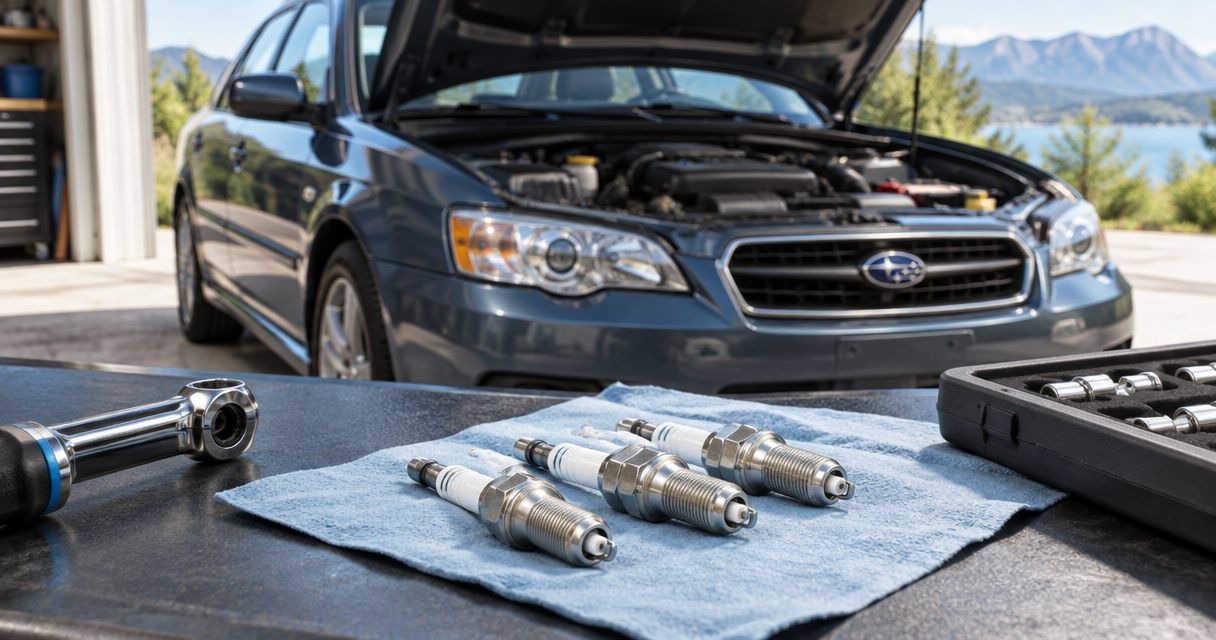
Best for routine Subaru spark plug replacement: the NGK plug specified for your exact engine. Best for owners buying through Subaru’s parts system: the application-matched Subaru Genuine plug. At Subamotive in Lakewood, Colorado, spark plug replacement means the right NGK plugs, efficient service, correct tightening, and a 2-year/24,000-mile warranty—not just a new box of parts.
- The best spark plugs for Subaru engines match the exact year, engine, and factory specification.
- Subamotive uses application-matched NGK spark plugs and backs its replacement service with a 2-year/24,000-mile warranty.
- Correct tightening protects the plug and cylinder-head threads; tighter is not better.
- Replacing worn plugs can restore lost fuel efficiency, but healthy plugs do not need a mileage upgrade.
- This guide covers gasoline Subaru models, including Outback, Forester, Crosstrek, Impreza, Legacy, Ascent, WRX, and BRZ.
Why the plug—and the person installing it—both matter
A spark plug has a straightforward job: ignite the air-fuel mixture inside the cylinder. Choosing the wrong plug or installing the correct one badly can turn ordinary maintenance into a running problem or a difficult repair later.
That is why Subamotive treats Subaru spark plug replacement as a complete service, not a brand-name purchase. You need the correct application, proper installation, and a shop that stands behind the work.
For owners comparing their options in 2026, the useful question is not simply “Which spark plug is best?” It is “Which plug belongs in my engine, and will it be installed correctly?”
What makes the best spark plugs for Subaru engines?
These are the checks that matter before the package is opened:
- Exact engine match: Model year, engine, and vehicle identification number guide the selection. Engine swaps and modifications need separate attention.
- Correct dimensions: Thread size, reach, and seat design must match the cylinder head.
- Correct heat range: The plug must transfer heat as the engine requires. A different heat range is not automatically an upgrade.
- Specified electrode design and gap: An iridium label alone does not establish compatibility.
- Traceable parts: Record the complete part number rather than relying on a retailer’s “fits Subaru” description.
- Proper installation: Use the applicable tightening specification and the plug manufacturer’s handling instructions.
A familiar brand cannot rescue the wrong part number. And an expensive plug cannot compensate for damaged threads or incorrect tightening.
Subaru spark plug choices at a glance
These are purchasing routes, not two universal plugs that fit every Subaru. Subaru-branded packaging and the underlying plug manufacturer are different things; verify the actual application rather than assuming the boxes describe different performance levels.
| Choice | Best for | What matters most | Limitation |
|---|---|---|---|
| Application-matched NGK | Routine replacement using Subamotive’s chosen brand | Correct NGK part number and factory-required specification | Not every NGK plug fits every Subaru |
| Application-matched Subaru Genuine | Owners choosing parts through Subaru’s parts system | Current Subaru part number matched to the engine | Subaru branding alone does not confirm fitment |
1. NGK: best for Subamotive’s routine Subaru spark plug service
NGK is the brand Subamotive uses for Subaru spark plug replacement. The recommendation is specific: install the NGK plug that matches the engine, not whichever NGK product has the most impressive name.
An Outback, WRX, and BRZ do not become interchangeable applications because they share a Subaru badge. The same caution applies across different generations of one model.
NGK pros:
- Supports a specification-led replacement using the shop’s chosen brand.
- Provides an identifiable part number for your service records.
- Publishes installation guidance covering tightening, electrode handling, and thread treatment.
NGK limitations:
- A brand name or electrode material does not establish fitment.
- New plugs do not fix a failed coil, oil leak, or mechanical problem.
Best for: Subaru owners who want the correct replacement installed by an independent Subaru shop.
Verdict: Choose the application-matched NGK plug, not a generic “performance upgrade.”
2. Subaru Genuine: best for an original-equipment parts lookup
A Subaru Genuine plug selected through the correct vehicle application is another route to the specified replacement. Confirm the current part number, particularly when an older number has been superseded.
This is a parts-selection option, not proof that a different box will improve power or fuel economy. The engine specification still decides what belongs in the cylinder head.
Subaru Genuine pros:
- Provides a direct Subaru parts-lookup route.
- Keeps the decision tied to the original vehicle application.
- Supplies a part number you can retain with the repair record.
Subaru Genuine limitations:
- Vehicle information still needs verification.
- Original vehicle details do not describe every engine swap or modification.
Best for: Owners who prefer Subaru-branded replacement parts.
Verdict: Choose the verified Subaru Genuine application; skip listings that promise universal Subaru fitment.
Outback, Forester, Crosstrek, Legacy: which Subaru models need spark plugs?
Gasoline Subaru engines use spark plugs, including those in hybrid vehicles with a gasoline engine. Fully electric Subarus do not. This distinction matters more than trying to fit every Subaru model into one parts recommendation.
Use this model guide as a starting point—not as a substitute for an engine-specific lookup.
| Subaru model or group | What to confirm before replacement |
|---|---|
| Outback and Legacy | Model year, engine, and whether the vehicle has a four- or six-cylinder application |
| Forester | Engine generation and turbocharged versus non-turbocharged application |
| Crosstrek and Subaru XV | Model year, engine, and gasoline or hybrid configuration |
| Impreza | Exact engine and generation; the model name alone is not enough |
| WRX and WRX STI | Engine, factory specification, and any tuning or hardware changes |
| Ascent | Exact turbocharged engine application and specified plug |
| BRZ | Engine generation and its own service requirements |
| Baja and Tribeca | Engine identification and maintenance history on the older vehicle |
| Older models, including SVX, XT, Justy, Loyale, and BRAT | Confirm the installed engine and current replacement application individually |
This 2026 guide intentionally covers more than the Legacy. Broader model coverage does not mean one plug, one gap, or one tightening specification fits every engine. If your Subaru has been modified, explain what changed before parts are ordered.
Why correct spark plug torque protects your Subaru
Torque means the specified tightening force. Your point of contact with the shop should be simple: the plugs must be properly seated and tightened to the correct specification—not tightened as hard as possible.
Too little tightening can prevent proper seating and heat transfer. Too much can damage threads, stretch the plug’s metal shell, or compromise its internal seals. NGK’s installation guidance identifies both under-tightening and over-tightening as potential causes of engine damage.
Subamotive installs spark plugs to the applicable torque specification. That matters during today’s repair and when the plugs eventually need to come out again. Careful installation reduces avoidable damage; it is not a promise that an older engine can never develop a thread or removal problem.
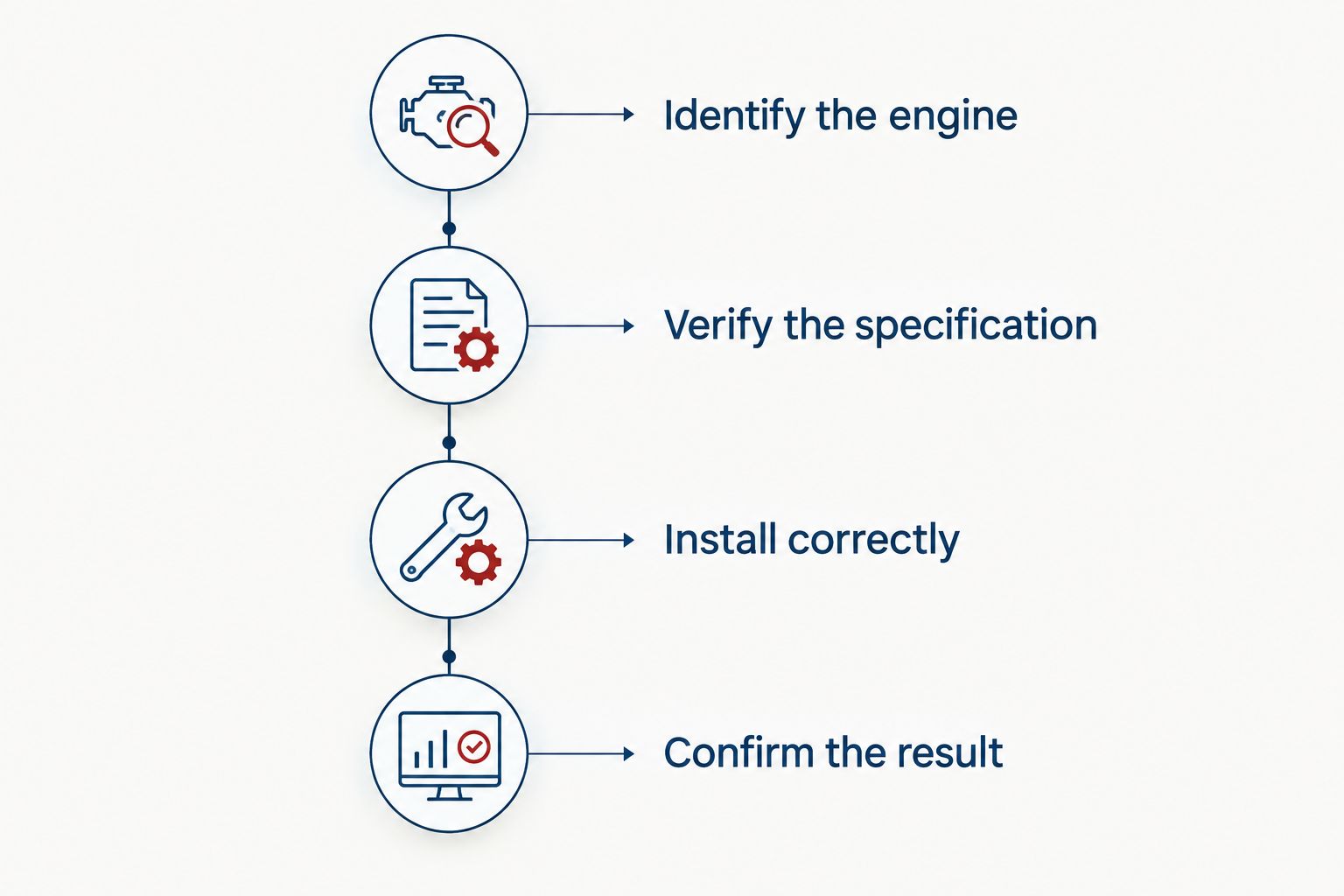
A proper installation decision includes:
- Confirming the exact plug and engine requirements.
- Checking each spark plug’s gap against the engine specification, even when the plugs arrive pre-gapped.
- Allowing the engine to cool before removal and installation.
- Keeping dirt and debris out of the plug openings.
- Avoiding cross-threading and damage to the electrodes or ceramic.
- Using the specified tightening procedure rather than a universal Subaru number.
NGK also advises against anti-seize on its plated spark plug threads. Lubrication changes the tightening relationship and can contribute to over-tightening. That is a manufacturer instruction, not a reason to improvise a different torque setting.
Will new spark plugs improve Subaru gas mileage?
Replacing worn or misfiring plugs can restore fuel efficiency lost to poor ignition. Replacing healthy plugs does not guarantee better gas mileage. That distinction keeps a useful maintenance service from becoming an unsupported fuel-savings claim.
NGK explains that electrode wear increases the voltage needed for the spark to cross the gap. Replacing worn plugs restores ignition efficiency; the benefit depends on the condition of the plugs being removed.
If your Subaru is running poorly and using more fuel, find the cause. Ignition coils, fuel delivery, air leaks, and mechanical faults also deserve attention. Repeatedly changing plug brands is not a diagnostic plan.
For your 2026 maintenance decision, aim to restore correct operation—not buy a promised increase in miles per gallon. There is no honest universal fuel-savings percentage for every Subaru owner.
When should Subaru spark plugs be replaced?
Follow the maintenance schedule for your exact model year and engine. A plug manufacturer’s general service-life claim is not permission to extend Subaru’s specified replacement interval.
Do not wait for rough running if scheduled replacement is due. Equally, do not approve plugs as the cure for a warning light without evidence that they caused the problem.
Bring these details to your appointment:
- Current mileage and model year.
- The date and mileage of the last plug replacement, if known.
- Any rough idle, hard starting, hesitation, or reduced fuel economy.
- Whether the warning light is steady or flashing.
- Any engine replacement, tuning, or other modifications.
A flashing check-engine light with rough running needs prompt assessment. Stop driving as soon as it is safe and arrange assistance; an active misfire can damage the catalytic converter.
Subaru spark plug replacement in Lakewood, CO
Subamotive is an independent Subaru repair shop for Lakewood and Denver-area owners who want application-matched NGK plugs, verified spark plug gaps, correct tightening, and a 2-year/24,000-mile service warranty.
The service is designed to be fast and efficient without skipping the details that protect the engine. Exact turnaround depends on the vehicle and what the inspection finds; speed is not a reason to rush difficult access or ignore a damaged component.
You should understand what is being replaced and why before work begins. The shop’s rule is direct: No Repairs Without Your Approval!
When comparing estimates, look beyond the brand name. Ask whether the quote identifies the plug application, addresses any running complaint, and explains the warranty. Confirm the warranty terms with the shop rather than assuming it covers unrelated engine or ignition problems.
Schedule Subaru spark plug replacement
Application-matched NGK plugs, correct tightening, and a 2-year/24,000-mile warranty at Subamotive in Lakewood, serving the Denver metro area.
Side note: $0 spark plug replacement labor with head gasket or engine replacement
Replacing your spark plugs during Subamotive’s Subaru head gasket replacement or engine replacement service adds $0 in spark plug replacement labor. The spark plugs themselves are not free; this offer covers the labor to install them alongside the larger repair, not the labor for the head gasket or engine replacement.
If you already need Subaru head gasket replacement or Subaru engine replacement, ask to include spark plugs in your estimate. This is an optional maintenance add-on—not a reason to recommend major engine work or replace plugs that do not need it.
Financing is available for all Subaru repairs, including spark plug service and major engine repairs. Explore Subamotive’s repair financing options and review the provider’s approval requirements and terms before choosing a payment plan.
How these recommendations were chosen
This 2026 guide prioritizes engine compatibility, installation requirements, traceable parts, and the service Subamotive actually provides. It is not a horsepower test or a claim that every Subaru left the factory with the same manufacturer’s plug.
NGK takes the first position because it is Subamotive’s chosen brand for this service. Subaru Genuine remains a verified parts-selection route, not a competing promise of better performance.
Which Subaru spark plugs should you choose?
Choose the correct NGK application for your engine and have it installed properly. That is a more useful decision than chasing a universal “best plug” across Outback, Forester, Crosstrek, Impreza, Legacy, WRX, Ascent, and BRZ engines.
If you are in Lakewood or the Denver metro area, bring your mileage, maintenance history, and symptoms to the shop. The goal is reliable ignition, protected threads, and a repair you understand—not parts you did not need.
FAQ
What are the best spark plugs for Subaru engines?
Subamotive recommends the application-matched NGK spark plug for its Subaru replacement service. The exact model year, engine, and factory requirements determine the part number—not the Subaru badge alone.
Do all Subaru models use the same NGK spark plug?
No. Different engines and model years require different applications, and fully electric Subarus do not use spark plugs. Confirm the complete part number before installation.
Are iridium spark plugs best for every Subaru?
Use iridium when the exact engine application specifies that construction or a documented equivalent. Iridium branding alone does not establish the correct dimensions, heat range, or gap.
Will replacing spark plugs improve my Subaru’s gas mileage?
Replacing worn plugs can restore fuel efficiency lost to poor ignition. Healthy plugs do not become more fuel-efficient simply because they are replaced, and no universal mileage improvement is guaranteed.
Why does spark plug torque matter?
Correct tightening helps the plug seat and transfer heat properly while protecting the plug and cylinder-head threads. Both under-tightening and over-tightening can cause damage.
Does Subamotive warranty Subaru spark plug replacement?
Subamotive backs its spark plug replacement service with a 2-year/24,000-mile warranty. Ask the shop to explain the applicable coverage and terms before approving the work.
How often should I replace Subaru spark plugs in 2026?
Use the maintenance schedule for your exact Subaru model year and engine. Bring the current mileage and previous replacement record so the shop can distinguish scheduled maintenance from diagnosis of a running problem.
Where can I get Subaru spark plugs replaced near Denver?
Subamotive provides Subaru spark plug replacement in Lakewood, Colorado, serving Denver-area owners. The shop uses application-matched NGK plugs, proper tightening, and a 2-year/24,000-mile service warranty.
One last thing: ask what the old plugs showed
If replacement is meant to address a misfire, the removed plugs are evidence—not just scrap. Unusual deposits, electrode wear, or oil contamination need to be interpreted alongside the symptoms and test results.
Ask what the technician found and whether it explains the complaint. A successful repair solves the ignition problem; it does not merely change the name on the box.