Yes—a Subaru’s check engine light can accompany a head gasket problem when the failure causes misfires or other conditions the engine computer detects. The light alone does not diagnose a failed head gasket, and an overheating engine needs immediate attention whether the check engine light is on or off.
- A Subaru check engine light is not a head gasket diagnosis; misfires have several possible causes.
- Repeated coolant loss, overheating, and recurring misfires together warrant cooling-system and cylinder-sealing checks.
- Stop safely if your Subaru overheats; never open a hot cooling system.
- Subamotive offers Subaru repair in Lakewood. Diagnostic testing is separate from the free visual inspection and requires approval.
Subamotive provides Subaru head gasket and cam carrier repair in Lakewood, serving the Denver metro area. Here is how to separate a warning-light concern from evidence of a gasket leak.
Can a Subaru’s check engine light mean a head gasket problem?
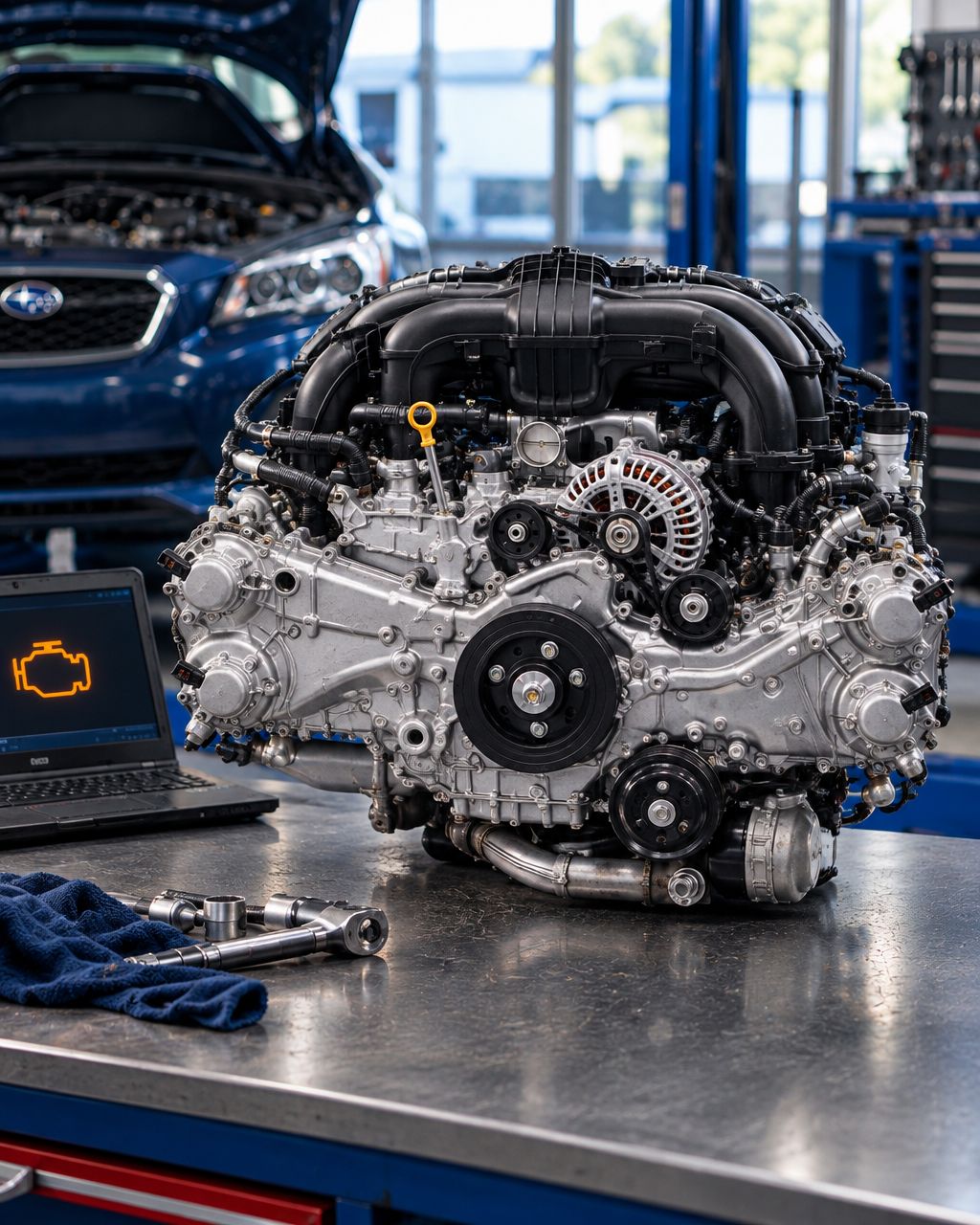
Yes, but the connection is indirect. The engine computer monitors operating conditions, not the physical condition of the head gasket. If a gasket leak allows coolant into a cylinder and disrupts combustion, the computer can detect the resulting misfire and turn on the check engine light.
A gasket can also leak externally without immediately creating a monitored fault. No check engine light does not mean the head gasket is healthy. Diagnosis needs to connect the symptoms, fault codes, and mechanical test results.
| Finding | What it tells you | What it does not prove |
|---|---|---|
| Check engine light alone | The computer detected an emissions-related fault | That the head gasket failed |
| Misfire code | Combustion is irregular in one or more cylinders | Whether ignition, fuel, compression, or coolant intrusion caused it |
| Repeated coolant loss | Coolant is escaping or being displaced | Where the leak originates |
| Overheating | The cooling system is not controlling engine temperature | Whether the gasket caused the overheating or suffered damage afterward |
| Persistent white exhaust after warm-up | Coolant entering combustion needs investigation | That ordinary condensation has been ruled out |
| Combustion gases detected in coolant | A combustion-to-cooling-system leak needs investigation | Whether the gasket, cylinder head, or engine block is responsible |
Subamotive is an independent Subaru repair shop for drivers who want an explanation before authorizing work. Report the warning light and cooling-system symptoms together; neither should be considered in isolation.
Why this matters
Approving a head gasket replacement because of a warning light skips the most important step: identifying the failure. Replacing spark plugs without investigating repeated coolant loss makes the opposite mistake. Either approach leaves part of the evidence unexplained.
For a 2026 repair decision, ask for a diagnosis that accounts for both the electronic fault and the physical symptoms. You need to know what failed, how the shop confirmed it, and whether overheating caused additional damage.
Check engine light, overheating, or both: what should you do?
Temperature and how the engine runs determine urgency—not just whether the check engine light is on. Do not assume a steady light makes a car safe if it is also overheating or losing coolant.
| What you notice | What to do next |
|---|---|
| Overheating, steam, or an abnormal temperature warning | Stop safely, switch off the engine, and arrange assistance. Do not open the hot cooling system. |
| Flashing check engine light with shaking or rough running | Avoid continuing the trip; contact a shop about safe transport and prompt diagnosis. |
| Steady light, normal temperature, and no obvious running problem | Arrange diagnosis and follow your owner's manual. A steady light is not a head gasket verdict. |
| Recurring coolant loss with or without a light | Arrange a cooling-system inspection rather than repeatedly topping up and ignoring the cause. |
If you are unsure whether the engine is overheating, do not keep driving to find out. Describe the warning and symptoms to the shop before moving the vehicle.
What fault codes actually tell you
Your Subaru’s OBD-II (on-board diagnostics) system stores diagnostic trouble codes, or DTCs, when it detects certain faults. The check engine light is also called the malfunction indicator lamp (MIL). A code identifies a detected condition—not an instruction to replace the component that sounds most closely related to it.
For example, P0300 identifies random or multiple-cylinder misfires, while P0301 identifies a cylinder 1 misfire. P0302, P0303, and P0304 identify misfires in cylinders 2, 3, and 4 respectively. None of these codes identifies the failed part.
Worn spark plugs, faulty ignition coils, fuel-delivery problems, air leaks, and mechanical faults can also cause misfires. A code reader supplies a starting point; it does not distinguish an ignition problem from coolant entering a combustion chamber through a leaking cylinder head gasket.
That distinction matters when your Subaru runs roughly after sitting overnight. Coolant intrusion is one possible explanation, but a rough start alone does not separate it from other causes. The technician needs to establish which cylinder is affected and what is interrupting combustion.
Before anyone clears codes, save the diagnostic information:
- The exact stored and pending codes, not just a description such as engine problem.
- Freeze-frame data showing operating conditions when a fault was recorded.
- Whether the light was steady or flashing.
- Whether the engine was cold, fully warmed up, idling, or under load.
- Any simultaneous temperature warning, coolant loss, or unusual exhaust.
Clearing a code can erase useful context without correcting the fault. Disconnecting the battery to turn the light off has the same basic limitation: the underlying problem remains untested. Ohio EPA’s OBD-II guidance, published July 14, 2021, explains that clearing diagnostic data or disconnecting the battery can also leave emissions readiness monitors incomplete. This explains the diagnostic effect; it is not Colorado emissions-testing guidance or permission to drive an overheating vehicle.
Which symptoms make a head gasket problem more concerning?
A pattern of symptoms deserves more weight than a single clue. Coolant loss together with a recurring misfire calls for a different investigation than a steady check engine light with normal temperature and no fluid loss.
Repeated coolant loss
Coolant should not need repeated topping up as part of normal operation. External leaks from hoses, the radiator, water pump, or other cooling-system components need checking before the loss is assigned to a head gasket.
Unexplained coolant loss, bubbling in the coolant reservoir, and reduced cylinder compression warrant investigation. These are reasons for testing, not proof of a blown head gasket by themselves. Report any bubbling you have already noticed; never remove a hot radiator cap or open the cooling system to look for it.
Check the level only according to the owner’s manual and with the engine safely cooled. Record whether the level keeps dropping, but do not treat repeated refilling as a repair.
Overheating or an abnormal temperature warning
A head gasket leak can contribute to overheating, and overheating can damage a head gasket. The order matters because replacing a damaged gasket without correcting the original cooling-system fault leaves the engine exposed to another failure.
A cracked cylinder head and a leaking head gasket can produce overlapping symptoms. A suspected Subaru head gasket failure needs testing to identify the leak path—not a repair decision based on symptoms alone.
Tell the technician what happened first. A temperature warning before rough running is a different history from a recurring misfire followed later by coolant loss.
White exhaust that persists after warm-up
Water vapor from a cold exhaust is normal, especially in cold weather. White exhaust that continues after the engine warms up, particularly alongside unexplained coolant loss, needs investigation.
Appearance alone does not confirm the source. Give the shop the conditions under which you noticed it instead of labeling every visible exhaust cloud a gasket failure.
Changes in oil or coolant appearance
An unusual oil-and-coolant mixture warrants inspection, but residue under an oil cap does not establish a failed gasket by itself. Moisture from short trips can create deposits that look concerning.
The reverse is equally important: clean-looking oil does not rule out a gasket leak. A failure can affect a combustion chamber and cooling passage without mixing coolant into the engine oil.
Does every Subaru engine have the same head gasket problem?
No—your Subaru's exact engine and leak location matter. A model name alone does not establish the engine type or explain a leak. Tell the shop the model year, whether the engine is turbocharged, and whether it has been replaced or modified.
Subaru's boxer engine uses horizontally opposed cylinders, but that layout does not make every warning light a gasket problem. EJ, FB, and FA engines should not be treated as interchangeable repair jobs.
A cam carrier oil leak is also not automatically a head gasket failure. These are different sealing areas. Ask the shop to identify where the fluid originates rather than treating every oily engine surface as evidence of a blown head gasket.
For a 2026 Subaru repair estimate, ask which engine the quote covers and whether the findings concern an external leak, a combustion leak, or another sealing problem. That makes the proposed scope more useful than a generic head gasket recommendation.
How should a shop check for a head gasket leak?
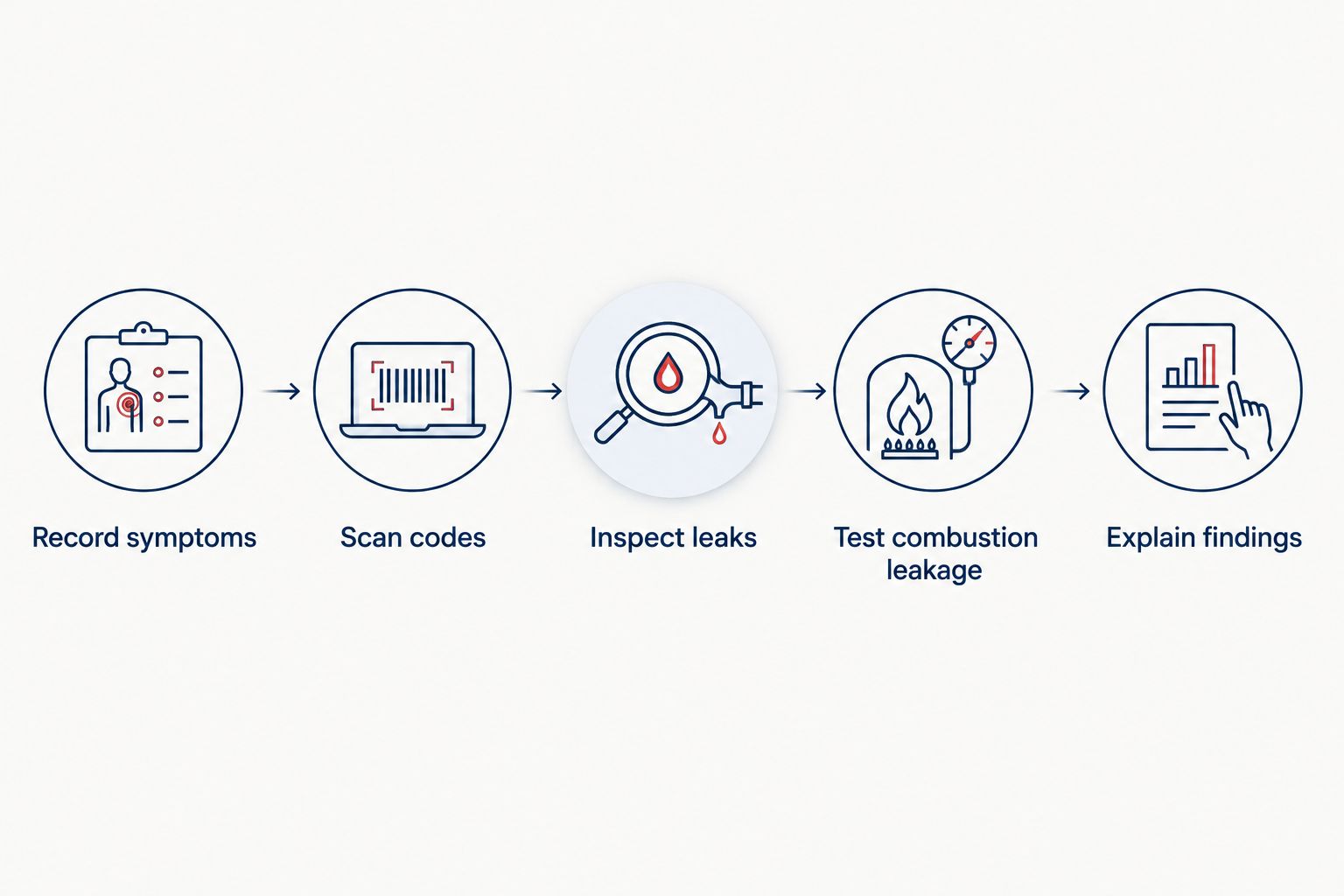
A sound 2026 diagnosis starts with the complaint and works toward a confirmed leak path. There is no single test that answers every head gasket question, because external leaks and internal combustion leaks behave differently.
- Record symptoms and establish whether the vehicle is safe to run.
- Scan codes and review the operating conditions when faults occurred.
- Inspect leaks before attributing coolant loss to the gasket.
- Test combustion leakage or cylinder sealing when the symptoms support it.
- Explain findings, including what is confirmed and what remains uncertain.
Your Subaru's symptoms determine which tests are appropriate—not every car needs every test.
| Check | What it helps investigate | Important limitation |
|---|---|---|
| Code scan and operating data | Which faults occurred and under what conditions | A misfire code does not identify a failed gasket. |
| Cooling-system pressure test | Where coolant escapes under test pressure | An intermittent leak may not appear under the test conditions. |
| Combustion-gas test | Whether combustion gases are entering the cooling system | A positive result does not distinguish a gasket from a cracked head or block. |
| Compression or cylinder leak-down test | Cylinder sealing and possible leakage paths | Results require interpretation alongside other findings. |
Ask which finding supports the repair and which other causes remain possible. A scan-only visit and a mechanical leak investigation are not the same service.
A negative test result also needs to be considered alongside the symptoms and test conditions. If a leak appears only when the engine is hot or under load, a test performed under different conditions may leave the complaint unresolved.
Why head gasket symptoms vary
Different leak paths create different symptoms. Another owner's repair story cannot diagnose your Subaru, even when the warning lights look familiar.
- Leak location: External leakage differs from coolant entering a cylinder or oil passage.
- Temperature: A fault can behave differently cold and hot.
- Engine load: Changing cylinder pressure can affect how a leak appears.
- Leak size: An intermittent leak is harder to reproduce than a persistent one.
- Previous overheating: Heat damage can involve more than the gasket.
For your 2026 inspection, describe the conditions: rough only on the first start, for example, or temperature rising on hills.
Should I approve head gasket replacement after a misfire code?
A misfire code alone is not enough evidence to approve head gasket replacement. Ask which tests distinguish the suspected gasket leak from ignition, fuel, or other mechanical faults.
A clear explanation should identify the affected area, the supporting findings, and any additional damage or unresolved cause of overheating. You should also understand what happens if disassembly reveals a damaged cylinder head or another problem outside the initial repair scope.
Subamotive’s approach is no repairs without your approval. Review the diagnosis and written repair scope before authorizing work, rather than approving a major repair based only on a code. If further testing or disassembly is needed, ask what you are authorizing at that stage and how additional findings will be handled.
Which replacement head gaskets does Subamotive use?
Subamotive uses updated multi-layer steel (MLS) head gaskets—Subaru OEM (original equipment manufacturer) or carefully selected high-quality aftermarket options such as Six Star—matched to the specific engine. A reference to an aftermarket gasket does not mean every brand or design is interchangeable or meets the shop’s standards.
The Six-Star and Subaru Genuine gasket catalog lists separate applications for non-turbo, turbo, and FB engines. Ask which gasket is specified in your written repair scope and why it suits your Subaru. Parts selection does not replace confirming the leak and addressing the cause of overheating.
What does Subaru head gasket replacement cost at Subamotive?
Subamotive’s listed head gasket replacement pricing starts at $1,895 for SOHC non-turbo engines from 1999–2012. Cylinder-head resurfacing is additional. The engine-specific prices below are from the shop’s head gasket service page, confirmed by Subamotive in November 2026; request a written estimate for your vehicle.
| Engine application | Listed replacement price* |
|---|---|
| SOHC non-turbo (1999–2012) | $1,895 |
| DOHC non-turbo (1996–1999) | $2,190 |
| EJ turbo, belt driven | $3,570 |
| FB non-turbo, chain-driven four-cylinder (2011–present; direct-injection pricing varies) | $3,595 |
| H6, chain-driven six-cylinder | $4,300 |
| FA20 turbo, chain driven (2015–present) | $4,500 |
Prices can vary slightly with conventional versus synthetic oil, blue versus green coolant, and newer direct-injection models. These application labels follow the shop’s pricing page; confirm your exact engine with Subamotive rather than choosing a price from model year alone.
What does the listed replacement include?
All replacements include Six-Star multi-layer steel head gaskets and the following Subaru OEM parts: valve cover gaskets, spark plug tube seals, intake and exhaust manifold gaskets, coolant crossover and dipstick tube O-rings, and a thermostat. An oil change and new coolant are also included.
Chain-driven engines also include cam carrier and timing cover resealing, in addition to the items above. Those included reseals are part of the listed chain-driven repair—not optional preventive add-ons.
How much is cylinder-head resurfacing?
Cylinder-head resurfacing is added to the head gasket pricing above, not included in it:
| Cylinder-head type | Additional resurfacing charge |
|---|---|
| SOHC | $250 |
| DOHC | $270 |
| DOHC H6 | $320 |
Engine rebuilds and engine replacements require separate pricing; contact Subamotive for an estimate. Any optional preventive work described below is separate from the listed replacement scope and requires your approval.
Can optional repairs save labor during Subaru head gasket replacement?
Yes—combining suitable repairs while the engine is already apart can reduce overlapping labor compared with doing those jobs separately later. Subamotive regularly performs Subaru head gasket repairs and offers an engine teardown estimate with optional preventive maintenance and resealing items. The goal is to help you plan for long-term ownership, not make every add-on a requirement.
Depending on your engine and the inspection findings, the optional work can include:
- Engine oil leak repairs: resealing common leak areas that are accessible during the head gasket job.
- Cooling-system hoses: replacing deteriorated hoses or hoses with a known failure history for that application.
- Common failure components: replacing suitable wear or failure-prone parts while access overlaps with the approved repair.
Ask which items are needed to complete the head gasket repair, which are optional, and where the labor overlaps. A leaking seal and a preventive replacement are different reasons for work; the estimate should make that distinction clear. Labor savings depend on the engine, access, and items you choose—not every additional repair shares the same labor.
You choose which optional items to add. No repairs proceed without your approval. Bundling work does not guarantee that every future oil leak or cooling-system failure will be prevented.
What should I bring to a 2026 Subaru diagnostic appointment?
Bring your model year, mileage, engine details if known, and previous cooling-system repair records. A short symptom log should cover:
- When the light appeared and whether it flashed.
- When rough running occurs and whether coolant levels drop.
- Any overheating, code clearing, sealer use, or attempted repairs.
Take photographs only when safe; never open a hot cooling system to gather evidence. For a 2026 repair authorization, request written findings and a clear repair scope.
Subaru warning-light diagnosis in Lakewood, Colorado
Subamotive serves Subaru owners from 8390 W Colfax Ave, Lakewood, CO 80214, with repair and maintenance for the Denver metro area. Explain whether the light is steady or flashing, whether coolant is disappearing, and whether the engine has overheated when requesting an appointment.
The free multi-point vehicle inspection is visual only. Diagnostic testing is separate and requires approval. Do not assume the free inspection includes the mechanical tests needed to investigate an internal head gasket leak.
Request a Subaru diagnostic appointment and describe the symptoms so the shop can discuss the next step. An appointment request is not confirmation of availability. If the engine is overheating or running severely rough, discuss transport before driving it to the shop.
FAQ
Does a Subaru check engine light always mean a head gasket problem?
No—a Subaru check engine light does not specifically identify a head gasket failure. It signals a detected emissions-related fault, which needs diagnosis using codes, symptoms, and appropriate tests.
What code means my Subaru has a blown head gasket?
No single generic OBD-II code confirms a blown head gasket. Misfire codes can support an investigation, but mechanical and cooling-system findings must establish the cause.
Can my Subaru have a head gasket leak without milky oil?
Yes—a head gasket leak can occur without making the oil look milky. A leak involving a combustion chamber and coolant passage does not have to mix coolant into the oil.
Is white smoke from my Subaru always a head gasket problem?
No—visible water vapor during a cold start is not proof of head gasket failure. Persistent white exhaust after warm-up, especially with coolant loss, needs inspection.
Should I drive if my Subaru is overheating?
No—stop safely and switch off an overheating engine. Arrange assistance, and do not open a hot cooling system.
Will clearing the check engine light fix a head gasket leak?
No—clearing the check engine light does not repair a head gasket leak. It can also remove diagnostic information that helps explain when the fault occurred.
What should I ask before approving head gasket replacement?
Ask which findings confirm the leak and what other causes were checked. Review the written repair scope, the cause of any overheating, and how additional findings will be authorized.
One last thing
The cause of overheating matters as much as the damaged gasket. Before approving a 2026 head gasket repair, ask one direct question: what caused this failure, and how does the proposed work address it?
A repair explanation that identifies damage but ignores the original cooling-system problem leaves an important question unanswered. Get that answer before the work begins.